
Mahuli Fort: The Highest Peak in Thane
Hello, fellow explorers! If you are someone who loves a good physical challenge and wants to feel like you are standing on the roof of the world, then Mahuli Fort is the destination for you. As a local guide who has spent many mornings watching the sunrise from these peaks, I can tell you that there is nothing quite like the feeling of conquering the highest point in Thane district. This isn’t just a simple walk; it is a true trekker’s paradise filled with thick forests, ancient history, and some of the most dramatic rock formations in the Sahyadris.

1. Introduction & Location Overview
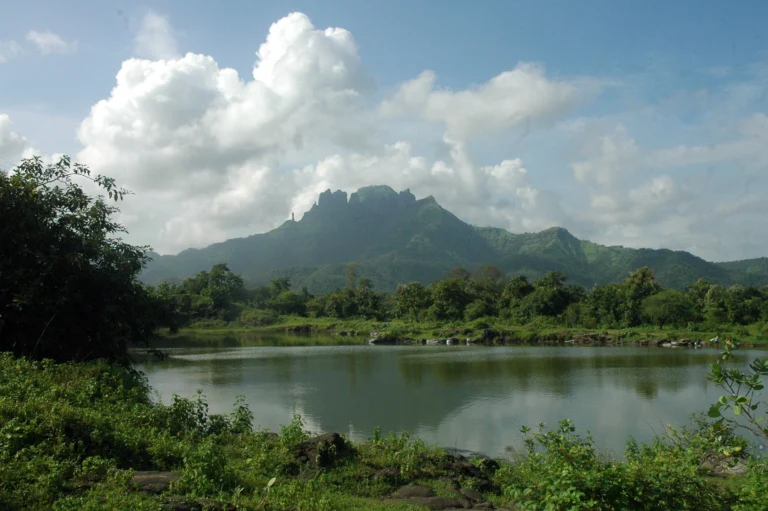
Mahuli Fort is located near Asangaon in the Thane district of Maharashtra. Standing at a majestic height of about 2,815 feet, it is the highest peak in the region. The fort is actually part of a large mountain range that has three distinct peaks—Mahuli, Bhandargad, and Palasgad.
When you look at the mahuli fort location from the base, the mountain looks like a giant hand with fingers pointing toward the sky. It is situated within the Tansa Wildlife Sanctuary, which means the entire climb is surrounded by rich greenery, diverse plants, and the sounds of nature. It is roughly 75 km from Mumbai and 150 km from Pune.
2. Why This Fort Is Famous
This fort is famous for being a mecca for rock climbers. The vertical cliffs and “pinnacles” (sharp rock peaks) of Mahuli are legendary. Professionals come from all over India to test their skills on these natural stone walls.
For regular trekkers, it is famous for the Mahuli Fort Shiva Temple and the large open caves that can shelter dozens of people at once. It is also well-known for its deep connection to the history of the Maratha Empire. In the monsoon, it becomes even more famous because the entire mountain gets covered in waterfalls, making it look like a scene from a fantasy movie.
3. Detailed History of the Fort
The mahuli fort history is one of constant battles and shifting power.
- Mughal and Nizam Era: The fort was originally part of the Nizam Shahi dynasty of Ahmednagar. It was considered an impenetrable stronghold because of its height.
- Shahaji Maharaj’s Brave Stand: In 1635-36, Shahaji Maharaj (the father of Chhatrapati Shivaji Maharaj) took shelter here with a young Shivaji while being chased by the massive Mughal and Adilshahi armies. This makes the fort very significant in the story of the birth of the Maratha Empire.
- The Maratha Conquest: Shivaji Maharaj captured the fort in 1658. However, like many other forts, it was surrendered to the Mughals under the Treaty of Purandar in 1665.
- Winning it Back: The Marathas eventually won it back in 1670, and it remained an important lookout point until the British took control in 1818.
4. Architecture & Strategic Importance
The architecture of Mahuli is unique because it uses the natural rock as its main defense.
- The Pinnacles: These act as natural watchtowers. In the old days, guards could see all the way to the Arabian Sea and the city of Kalyan.
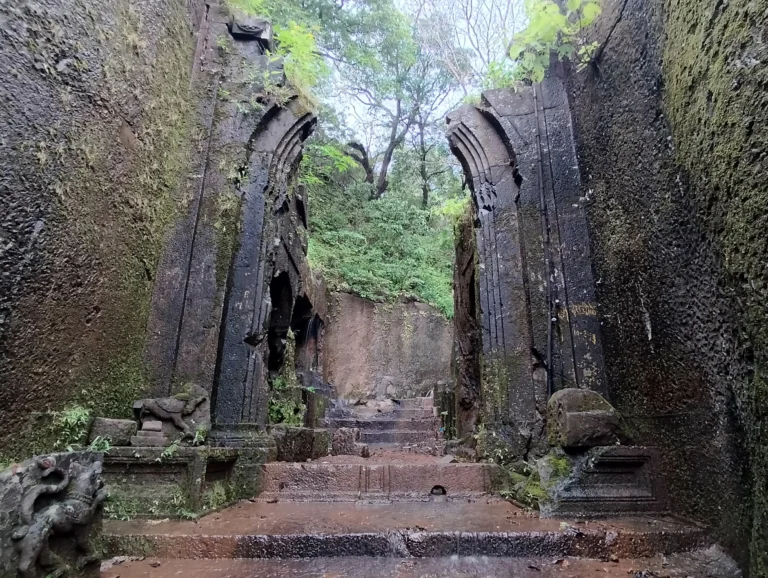
- Rock-cut Steps: To reach the higher sections, you have to climb steps carved directly into the mountain stone.
- Caves: The fort has massive natural caves that were expanded by humans to store grains and ammunition. These caves are still in excellent condition.
- Strategic Gate: The main entrance is hidden between rocks, making it very difficult for an enemy to use a battering ram or elephants to break in.
5. How to Reach the Fort
Reaching Mahuli is very convenient for those using public transport:
- By Train: This is the most popular way. Take a Central Line local train to Asangaon Railway Station. From the station, you can hire a private rickshaw to the base village, which is about 5 km away.
- By Road: If you are driving from Mumbai, take the Mumbai-Nashik highway (NH3). After crossing the Khadavli and Vasind regions, you will reach Asangaon. Take a left turn toward the Mahuli village.
- By Bus: ST buses from Kalyan or Thane go toward Shahapur; you can get down at Asangaon and take a local rickshaw.
- Trek Routes: The trek starts from the Mahuli village, right next to a small forest check-post.
6. Trek Information
The Mahuli fort trek is a rewarding experience but requires some stamina.
- Difficulty: Moderate. It is a continuous climb with some steep sections and a few small rock patches.
- Duration: It takes about 2.5 to 3 hours to reach the top from the base village.
- Mahuli Fort Trek Distance: The total distance is about 5 km one way.
- Route: The trail goes through a dense forest, crosses a small stream, and then follows a zig-zag path up the mountain.
7. Entry Fees, Timings & Permissions
- Entry Fee: Since it is part of a wildlife sanctuary, there is a small forest entry fee (approx. ₹20-₹30 per person) collected at the base.
- Timings: Open from 6:00 AM to 6:00 PM. Night trekking is officially not allowed without special permission from the forest department.
- Parking: Ample parking space is available at the base village for a small fee.
8. Best Time to Visit
- Monsoon (June to September): The most beautiful time. The waterfalls are in full flow, and the forest is lush green. However, be careful as the path can be slippery.
- Winter (October to February): The best time for the views. The air is cool, and the sky is clear, allowing you to see the distant peaks of the Sahyadris.
- Summer: Only recommended for early morning treks, as the forest can get very humid.
9. Things to See on the Fort
- Shiva Temple: A small, ancient temple at the top where trekkers often offer prayers.
- The Big Cave: A massive cave that can easily accommodate 50 people. It’s a great spot for a lunch break.
- The Three Peaks: Explore the different plateaus of Mahuli, Bhandargad, and Palasgad.
- Kalyan Darwaja: An old gateway that offers a view toward the city of Kalyan.
- Water Cisterns: Many rock-cut tanks that still contain water.
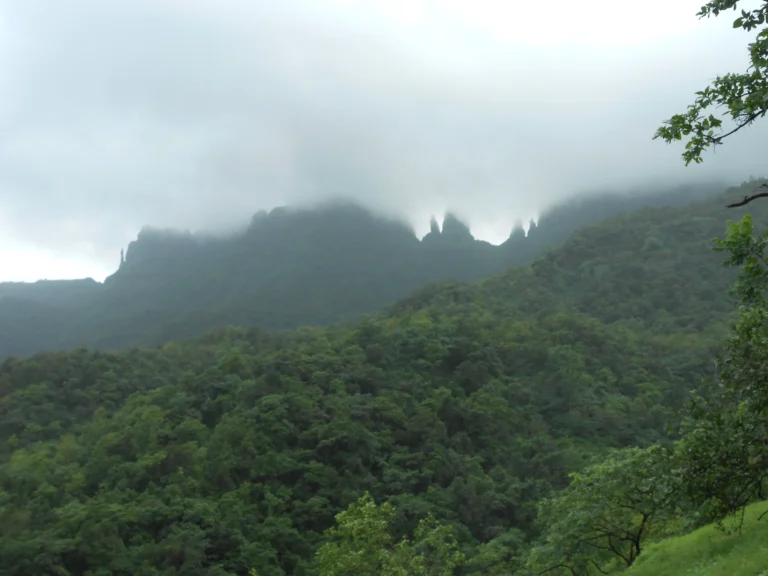
Mahuli Fort In Monsoon
10. Things to Do Near the Fort
- Tansa Dam: A massive and beautiful dam located very close to the fort.
- Manas Mandir: A stunning Jain temple in Asangaon known for its incredible marble architecture.
- Shahapur Markets: Great for buying fresh local vegetables and snacks.
11. Safety Risks & Dangerous Areas
- Slippery Rock Patches: There is a specific section with an iron ladder. Be very careful here, especially during the rain.
- Bees: Mahuli is known for having many beehives. Avoid wearing strong perfumes and do not make loud noises near the rock faces.
- Deep Valleys: The edges of the pinnacles are very sharp and vertical. Do not stand too close to the edge for photos.
12. Safety Precautions
- Grip Shoes: You absolutely need shoes with a good rubber sole for this trek.
- Start Early: The humidity in the forest can be draining; starting by 7:30 AM will save you from the afternoon sun.
- Follow the Markings: The trail is mostly well-marked with white arrows. Do not try to find “shortcuts” through the thick jungle.
13. Things to Carry Before Visiting
- Water: Carry at least 3 liters. The climb is long and there is no drinking water source on the way up.
- Salt/Electoral: Helpful to stay hydrated and prevent cramps.
- Full Sleeves: The forest has many insects and thorny bushes.
- Raincoat: Essential if visiting during the monsoon.
14. Travel Tips
- Mahuli Fort Information for Beginners: If this is your first “moderate” trek, take frequent breaks and carry some high-energy food like dates or jaggery.
- Photography: For the best mahuli fort photos, head to the edge of the plateau looking toward the pinnacles during the “golden hour” (just before sunset or after sunrise).
- Respect Nature: You are in a wildlife sanctuary. Do not play loud music or leave any plastic behind.
Forget the hassle and choose CABTAN—Mumbai’s most punctual and affordable cab service. Our trained drivers ensure a safe, reliable, and completely worry-free journey. Fill out the form below to book your ride now.