
Murud-Janjira: The Unconquered Marine Marvel
Welcome back to our journey through Maharashtra’s glorious past! Today, we are visiting a place that many call the “invincible” fort. If you have ever wanted to see a massive stone castle that floats in the middle of the deep blue Arabian Sea, then Murud-Janjira is the place for you. This fort is legendary because, for hundreds of years, many powerful kings tried to capture it, but none succeeded. It remained “unconquered” until the very end.

1. Introduction & Location Overview
Murud-Janjira is a spectacular sea fort located off the coast of Murud village in the Raigad district. Often referred to by tourists as the janjira fort alibag, it is actually situated about 55 kilometers south of Alibaug.
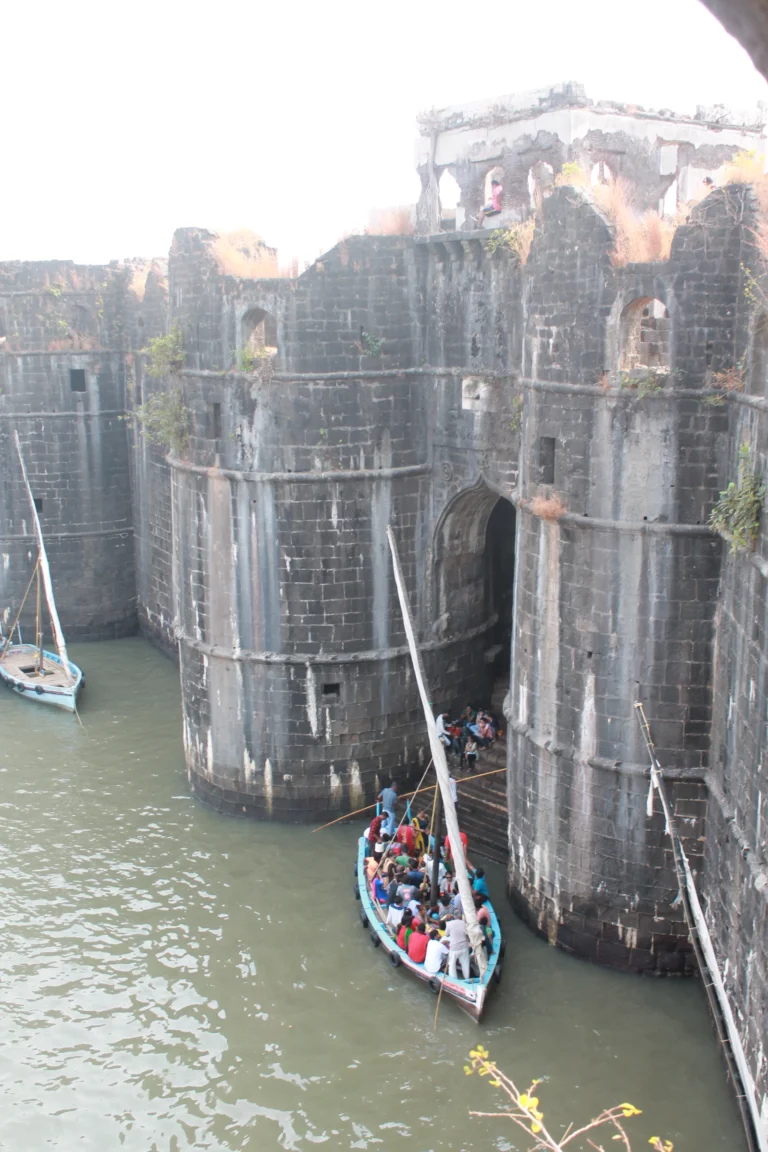
The fort is built on an oval-shaped rock in the sea. To get there, you have to leave the mainland behind and take a boat from the Rajapuri jetty. As you sail closer, the massive 40-foot-high walls seem to rise directly out of the waves. It is easily one of the most impressive forts in Maharashtra and a must-visit for anyone traveling to the Konkan coast.
2. Why This Fort Is Famous
This fort is world-famous because it is one of the very few coastal strongholds in India that was never captured in a battle. Even the great Maratha Navy, the Mughals, and the British could not break its defenses.
It is also famous for its incredible architecture. The main gate is hidden so cleverly that you can only see it when your boat is just a few meters away. Inside, despite being surrounded by salty seawater, the fort has two large natural lakes that provide fresh, sweet drinking water. Additionally, it houses three of the largest cannons in India, which were used to keep enemy ships far away from the shore.
3. Detailed History of the Fort
The history of Murud-Janjira is like an action movie.
- The Siddis: The fort was the stronghold of the Siddis, people of African descent who came to India as traders and soldiers. They became so powerful that they established their own independent state here.
- The Wooden Beginnings: Originally, in the 15th century, it was just a small wooden structure built by local fishermen to protect themselves from pirates. The Siddis captured it and turned it into the stone giant we see today.
- Maratha Attacks: Chhatrapati Shivaji Maharaj tried to capture this fort multiple times. His son, Sambhaji Maharaj, even tried to build a secret undersea tunnel and a nearby fort (Padmadurg) to defeat the Siddis, but Janjira stood firm.
- The Name: The word “Janjira” comes from the Arabic word Jazeera, which means “island.”
4. Architecture & Strategic Importance
The architecture of Murud-Janjira is a masterpiece of maritime defense.
- Invisible Gates: The “Sher Darwaza” (Main Gate) is built into a curve of the wall, making it invisible from a distance. This prevented enemies from targeting the gate with cannons from their ships.
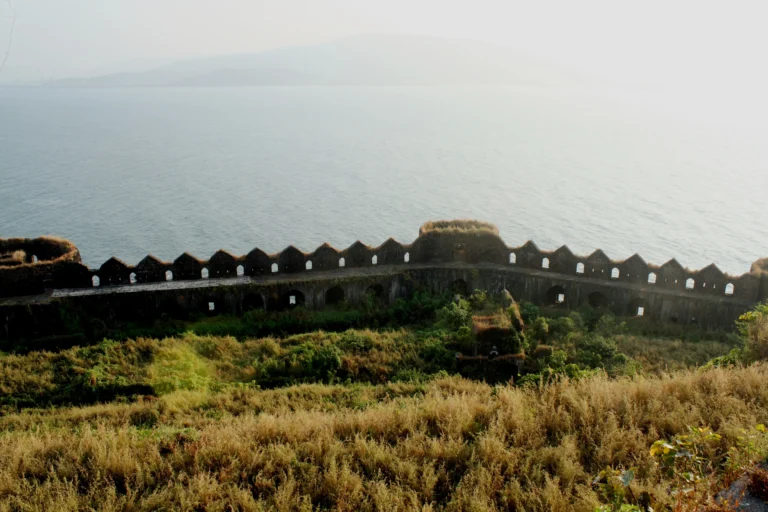
- Strong Walls: The fort has 21 rounded bastions that are still in excellent condition. These allowed guards to fire in every direction.
- The Cannons: The most famous cannon is called Kalal Bangadi. It was made by joining iron rings together and had a range so long that it could sink ships before they even got close to the island.
- Emergency Exit: There is a secret “Darya Darwaza” (Sea Gate) at the back of the fort that opens directly into the deep sea, used for escapes or receiving supplies during a siege.
5. How to Reach the Fort
Reaching the fort is a two-step adventure:
- By Road: You can drive from alibaug to murud janjira via the scenic Revdanda-Kashid road. It takes about 2 to 2.5 hours from Alibaug. If you are coming from Mumbai, it is about 150 km.
- By Bus: Regular ST buses run from Alibaug and Mumbai to the Murud bus depot.
- The Boat Ride: Once you reach the alibaug murud area, you must go to the Rajapuri Jetty. From here, you board a traditional sailboat. The boatmen use the wind to guide the boat to the fort entrance, which is a thrilling experience!
6. Trek Information
Since this is a sea fort, there is no mountain climbing, but there is plenty of walking involved.
- Difficulty: Easy. However, you must be able to climb a few steps from the boat into the fort entrance.
- Duration: The boat ride takes 15-20 minutes, and you usually get about 1 to 1.5 hours to explore the fort before the boat takes you back.
- Routes: There is only one way in and out—via the main sea gate.
7. Entry Fees, Timings & Permissions
- Entry Fee: There is no fee for the fort itself, but you have to pay for the boat ride (approx. ₹80–₹100 per person).
- Timings: 7:00 AM to 6:00 PM.
- Important Note: The fort is closed during the monsoon season (June to September) because the sea is too rough for the small boats to operate.
- Friday Break: The fort often closes for a couple of hours on Friday afternoons between 12:00 PM and 2:00 PM for prayers.
8. Best Time to Visit
- Winter (October to March): This is the alibag murud janjira peak season. The weather is cool, and the boat ride is very smooth.
- Summer: It can be very hot on the island with no shade, so visit early in the morning.
9. Things to See on the Fort
- The Giant Cannons: Specifically Kalal Bangadi, Landa Kasam, and Chavri. They are made of a special 5-metal alloy that doesn’t get hot even in the sun.
- The Freshwater Lakes: It is amazing to see deep pools of sweet water in the middle of the salty ocean.
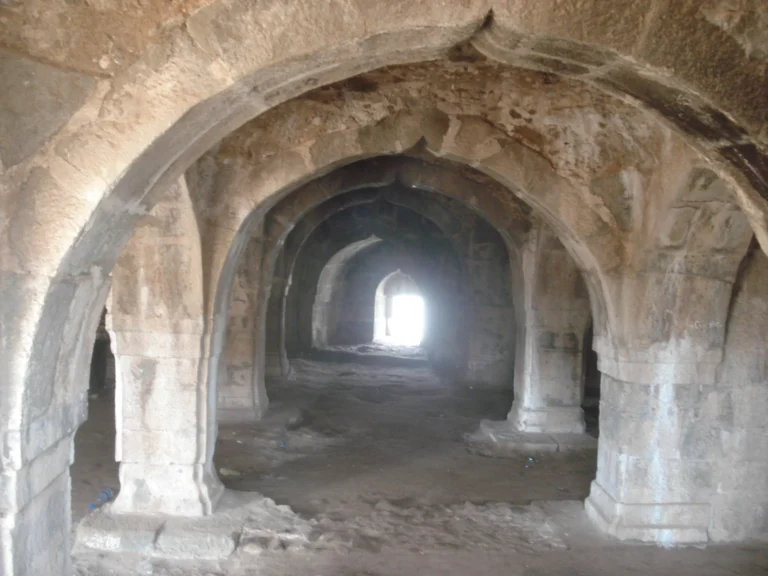
- The Palace Ruins: You can see the remains of the 5-story palace where the Nawabs once lived.
- The Mosque: A small, beautiful prayer hall that is still used occasionally.
- The View: Climb the highest point (the Citadel) for a breathtaking view of the ocean and the distant Padmadurg fort.
10. Things to Do Near the Fort
- Murud Beach: A long, beautiful beach with silvery sand and many coconut trees.
- Padmadurg Fort: Another sea fort built by the Marathas, visible from Janjira.
- Khokari Tombs: Ancient stone tombs of the Siddi rulers located near Rajapuri.
- Nawab’s Palace: A majestic private palace in Murud (you can view it from the outside).
11. Safety Risks & Dangerous Areas
- Getting on the Boat: When the tide is moving, the boat can be a bit unstable. Hold onto the railings tightly when stepping onto the fort stairs.
- Slippery Moss: The stairs at the entrance can be very slippery due to the seawater.
- Ruined Floors: Some parts of the internal palace are crumbling. Do not go inside areas that are fenced off.
12. Safety Precautions
- Life Jackets: Always ask for a life jacket on the sailboat.
- Sun Protection: There is almost no shade inside the fort. Wear a hat and use sunscreen.
- Stay with the Group: The boatmen give you a specific time to return. If you miss your boat, it can be difficult to find a seat on another one.
13. Things to Carry Before Visiting
- Water: Carry at least 1 liter of water as there are no shops inside the fort.
- Shoes: Wear shoes with a good grip (no high heels or smooth sandals).
- Camera: You will want to take many alibag janjira fort photos!
- Cash: Most boat operators and local stalls do not accept cards or UPI due to poor network.
14. Travel Tips
- Hire a Guide: There are many local guides at the fort entrance. They tell wonderful stories about the battles and the cannons for a small fee. It makes the trip much more interesting!
- Local Food: Try the fresh “Fish Thali” at any small restaurant in Murud or Rajapuri.
- Avoid Crowds: If possible, visit on a weekday. Weekends can get very crowded, and you might have to wait an hour for a boat.
Forget the hassle and choose CABTAN—Mumbai’s most punctual and affordable cab service. Our trained drivers ensure a safe, reliable, and completely worry-free journey. Fill out the form below to book your ride now.